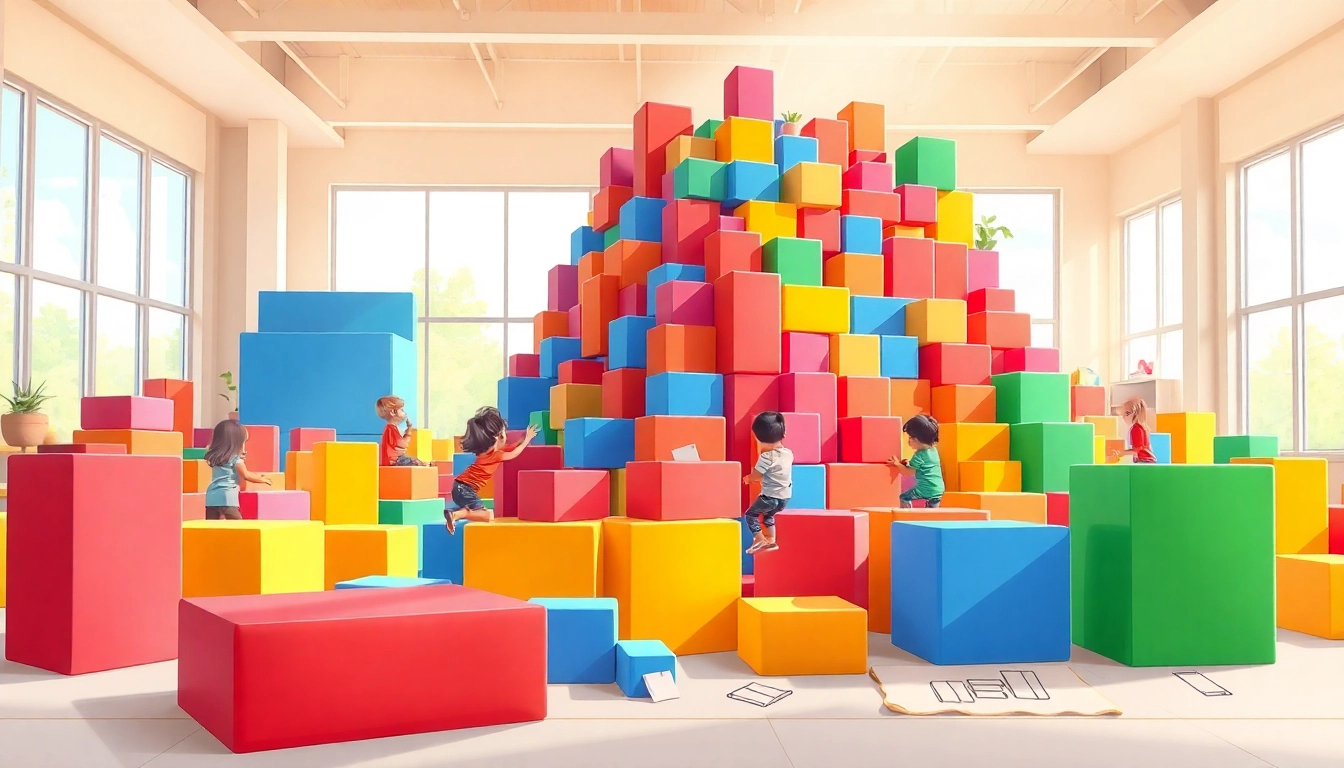
Understanding the Benefits of Foam Blocks
Foam blocks are more than just playthings; they are tools that facilitate a child’s learning and development. These soft yet sturdy building materials enable children to explore their imaginations, build structures, and develop critical skills in an interactive manner. To find out more about these versatile blocks, let’s delve into the specific benefits they offer.
Developmental Advantages
Foam blocks contribute significantly to various developmental milestones. They promote fine motor skills as children grasp, stack, and balance the blocks. Additionally, they enhance spatial awareness, essential for understanding how different shapes fit together in three-dimensional space. This stimulates cognitive development, allowing kids to process their surroundings more effectively. Studies show that engaging in block play can lead to improved math and science understanding, as children explore concepts like symmetry, balance, and gravity.
Encouraging Teamwork
Group play with foam blocks naturally fosters teamwork. Children learn to collaborate, share ideas, and communicate effectively while building larger structures. This social interaction cultivates essential interpersonal skills and encourages problem-solving as they negotiate space and resources with their peers. Structured group challenges, where kids must work together to construct something specific, can enhance these skills even further.
Fostering Creativity and Imagination
One of the most significant benefits of foam blocks is their ability to spur creativity. The open-ended nature of block play allows children to construct anything they imagine, from simple houses to complex castles and beyond. This flexibility promotes divergent thinking, where children learn to think of multiple solutions to a problem. Not only does this enhance creative abilities, but it also supports self-expression, as children manifest their ideas into tangible forms.
Choosing the Right Giant Foam Blocks
When selecting foam blocks for play, several factors come into play. Choosing the right set can make a significant difference in how effectively they serve educational and developmental purposes.
Safety Features to Consider
Safety is paramount, especially when it comes to children’s toys. Ensure your foam blocks are made from non-toxic, BPA-free materials that are soft yet durable. Look for blocks that have rounded edges to reduce the risk of injury during play. Additionally, some blocks come with anti-slip surfaces, which can help prevent accidents while children are stacking or balancing them.
Different Sizes and Shapes
Foam blocks come in an array of sizes and shapes. To encourage a diverse type of play, choose sets that offer variety. Larger blocks are excellent for foundational structures, while smaller blocks allow for intricate designs. Different shapes like triangles, squares, and cylinders can inspire children to think in three dimensions and develop more complex building techniques.
Durability and Maintenance
Durability is another essential factor to consider. High-quality foam blocks should withstand rigorous play without sagging or losing shape. Maintenance is straightforward because most foam blocks can be cleaned with a damp cloth and mild soap. Some are even machine washable, which is an advantage for busy parents looking to keep play areas hygienic.
Creating a Play Space
A well-organized play space can maximize the benefits of foam blocks. Setting up an engaging environment encourages creativity and allows kids to dive into their imaginative building journeys.
Setting Up for Fun
To encourage exploration, set aside a spacious area where children can freely build and move around. A soft carpet or large foam mat can create an inviting atmosphere and provide comfort during play. Ensure the space is well-lit and has enough ventilation, so children can focus solely on their creative tasks, minimizing distractions.
Incorporating Themed Play Zones
Consider introducing themed play zones to stimulate different types of play. For instance, a "city building" area can include foam blocks designed as roads and buildings, while a "nature zone" can incorporate shapes representing trees and animals. This thematic approach ignites imagination further and allows children to role-play, enhancing the overall play experience.
Safety Considerations in Indoor Spaces
When creating a play space, always prioritize safety. Remove sharp objects, breakable items, and any potential hazards from the vicinity. If using foam blocks indoors, ensure there’s ample space for movement to prevent any unintentional collisions or falls. Designate the play area to minimize disruptions and remind kids of safety rules while engaging with their blocks.
Activities for Engaging Play
To keep children engaged and maximize the value of their playtime, a range of activities can be introduced that focus on building, balancing, and creativity.
Group Challenges and Games
Group challenges can turn block play into a cooperative game. For example, challenge children to build the tallest tower within a time limit or to create a specific structure together. Such exercises teach critical thinking and communication skills, as they must strategize and make decisions collectively.
Building Challenges to Spark Imagination
Introduce prompts that spark imagination, such as asking children to recreate a landmark or design their dream home. By focusing on specific outcomes, you encourage children to think critically about architecture, shapes, and stability. These challenges enhance their cognitive abilities while keeping play fun and engaging.
Balancing and Stacking Activities
Incorporate balancing games into playtime, encouraging kids to stack blocks without letting them topple. This not only enhances hand-eye coordination but also teaches patience and perseverance. You can further elevate the challenge by having them stack blocks of different shapes and sizes, reinforcing their understanding of balance and engineering principles.
FAQs on Giant Foam Building Blocks
What age groups are foam blocks suitable for?
Foam blocks are suitable for children from toddlers to school-age kids. They cater to various developmental stages with different sizes and shapes, allowing for an inclusive play experience.
How do I clean and maintain foam blocks?
To clean foam blocks, use a damp cloth with mild soap. Most blocks can be easily wiped down for hygiene, helping maintain a clean play environment.
Are foam blocks safe for indoor use?
Yes, foam blocks are generally safe for indoor use. They are soft, lightweight, and designed to minimize injury risk, making them suitable for various play settings.
What types of structures can kids build?
Kids can build a wide array of structures, including towers, bridges, houses, and imaginative sculptures. The possibilities are limited only by their creativity.
How can foam blocks enhance developmental skills?
Foam blocks enhance skills in areas like fine motor abilities, spatial awareness, problem-solving, and social interaction, providing comprehensive developmental benefits.